By Dr. Alexander Roth, MD · November 12, 2026
PRP for hair loss is one of the most common treatments patients ask us about, and one of the most oversold online. Platelet-rich plasma is made from your own blood, so it is easy to see the appeal. The research is more encouraging than skeptics suggest and less settled than many ads imply. Here is what the clinical trials support, where the gaps are, and how PRP may fit into a long-term plan.
What PRP is and how it is done
A small amount of blood is drawn from your arm and spun in a centrifuge to separate the platelets from the rest of the blood. The concentrated, platelet-rich portion is then injected into thinning areas of the scalp. Platelets release growth factors, and the working theory is that these support weakened follicles and help prolong the hair growth phase.
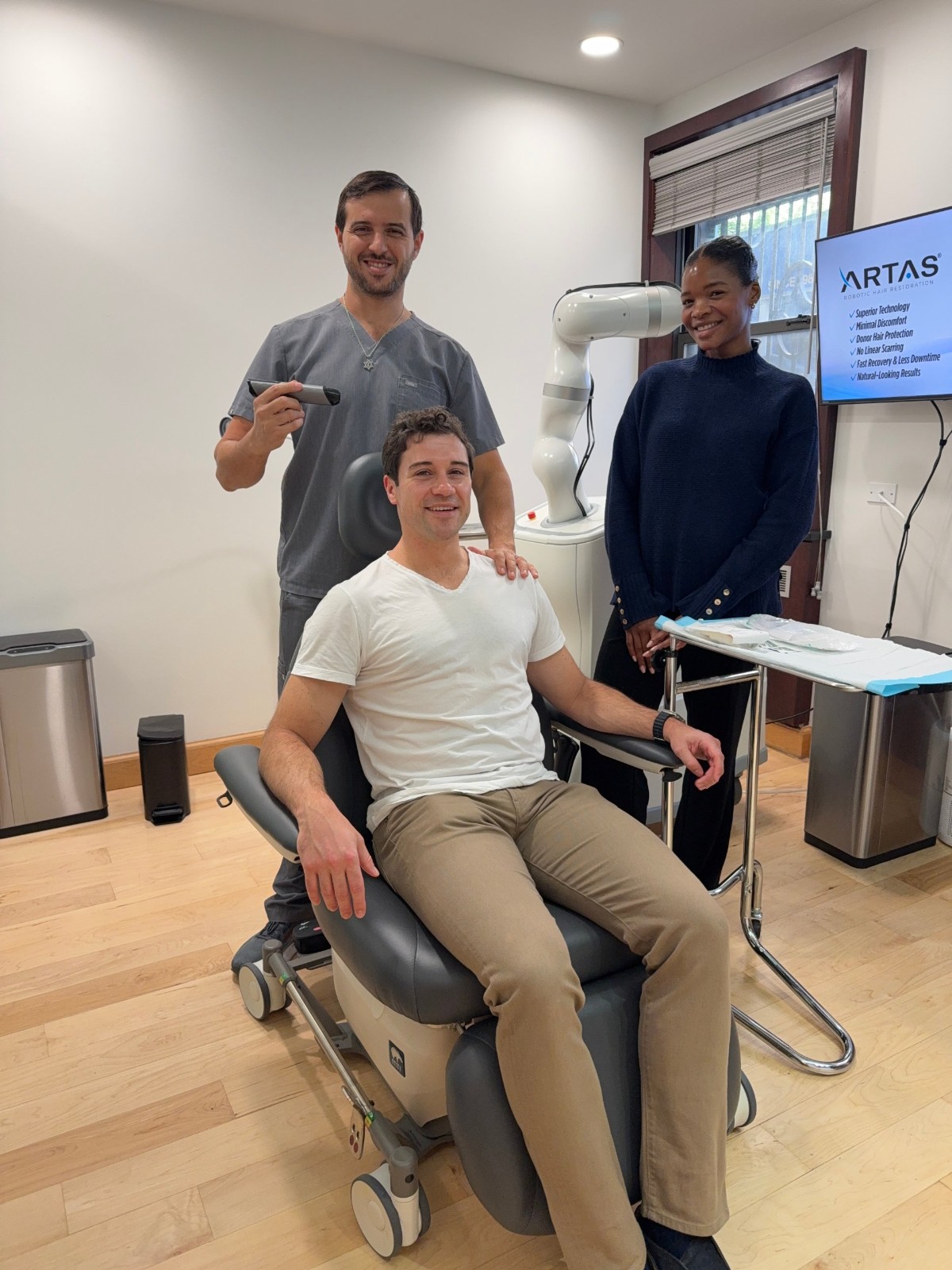
Two points are worth knowing up front. First, preparation methods vary widely between clinics and between studies, including the volume of blood drawn, the spin settings and whether the plasma is activated before injection. Second, no PRP product is FDA-approved to treat hair loss. The in-office systems used to prepare PRP were cleared for other purposes, so its use for hair loss is off-label. That does not mean it is unsafe or ineffective, but you should know it before you decide.
What the evidence supports
Most of the research is in androgenetic alopecia, the common pattern hair loss seen in both men and women. Several systematic reviews of randomized controlled trials have now been published:
- Hair density appears to improve. A 2024 review of 14 randomized trials found that PRP increased hair density compared with placebo, by roughly 27 hairs per square centimeter on average. The authors rated the certainty of that evidence as low because the trials were small and their results varied widely.
- Hair thickness is less clear. The same review found no statistically significant change in hair shaft diameter. A 2023 review of nine trials and 238 patients reported a similar pattern, with density improving at three and six months while hair count and diameter did not differ significantly from placebo.
- It may add to minoxidil. A 2024 review of five trials found greater hair density when PRP was added to topical minoxidil than with minoxidil alone. The authors described the evidence as very low quality.
Put plainly, the trials point in a favorable direction, but they are small, short and hard to compare with one another. Most follow patients for three to six months. There is no agreed standard for how PRP should be prepared, how much should be injected or how often. Even comparisons of preparation methods have been inconclusive. A 2025 review comparing single-spin and double-spin PRP found no statistically significant difference in hair density.
Who tends to be a better candidate
PRP works on follicles that are still present. It cannot create new follicles in areas that are already bald and smooth. For that reason, it is generally considered most useful in earlier stages of thinning, when miniaturized hairs are still present and can potentially be strengthened.
PRP may be worth discussing if you:
- Have early to moderate pattern thinning with hair still present in the area
- Want to add another option to medical therapy, or cannot tolerate certain medications
- Are planning or recovering from a transplant and want to support the native hair around it
It is less likely to meet your goals if you have extensive baldness, if your hair loss has a cause that has not yet been diagnosed, or if you expect a dramatic change from a few sessions. Women are often interested in PRP, but female-only trials are few and small, so the evidence in women is less consistent than in men. Our guide to who is a good female hair transplant candidate explains why an accurate diagnosis comes first.
PRP alongside a hair transplant
Some surgeons use PRP as an adjunct to transplantation, either during the procedure or in the months afterward. Small studies have reported faster early growth or improved density, but the data are limited, and PRP is not a substitute for good surgical planning. A transplant moves follicles into thinning areas. It does not stop pattern hair loss in the native hair around them. Medical therapy and treatments such as PRP are aimed at that native hair. Our article on physician-guided medical management for hair loss covers the medication side of the plan.
What a treatment course usually looks like
Protocols differ, but many published trials and practices use an initial series of about three to four sessions spaced roughly a month apart. Maintenance sessions every few months often follow. Each visit typically takes under an hour, including the blood draw, preparation and injections.
Results are gradual. Any change is usually assessed over several months, ideally with standardized photos or hair counts so you are not relying on memory. Long-term data beyond the first year are limited, so we treat PRP as an ongoing decision rather than a one-time fix and review progress with you along the way.
Side effects and who should avoid PRP
Because PRP comes from your own blood, allergic reactions are not expected. In clinical trials, side effects have generally been mild and short-lived. They include soreness during and after the injections, redness, minor swelling, pinpoint bleeding, headache and scalp itching. Most patients return to normal activities the same day or the next day.
PRP is not appropriate for everyone. Published contraindications include platelet or other blood disorders, use of blood thinners or antiplatelet medication, an active infection on the scalp, certain cancers and significant immune suppression. Anti-inflammatory pain relievers taken shortly before a session may also interfere with platelet function. Bring a complete list of your medications and supplements to your consultation, and do not stop any prescribed medication without speaking to the doctor who prescribed it.
How we approach PRP
At our office at 132 E 72nd St on the Upper East Side, a PRP discussion starts with a scalp exam and a clear diagnosis. We look at your pattern of loss, the degree of miniaturization, your donor area and the treatments you have already tried. Sometimes PRP is a reasonable addition. Sometimes medication, a transplant or simply monitoring makes more sense. We prepare PRP in our office with the EmCyte PurePRP system, which we describe in our article on our PRP preparation system. You can also learn more about our PRP hair treatment in NYC. This article is general education and not personal medical advice, and results vary.
Frequently asked questions
Does PRP really work for hair loss?
Randomized trials suggest PRP can improve hair density in pattern hair loss, but the studies are small and use different methods, and the overall certainty of the evidence is low. Individual results vary.
How many PRP sessions will I need?
Many protocols use about three to four sessions roughly a month apart, followed by maintenance sessions every few months. There is no universal standard, so your plan should be based on your exam and response.
Can PRP regrow hair on a bald area?
No. PRP acts on existing follicles. Areas without follicles need a different approach, such as a hair transplant if your donor supply allows it.
Is PRP FDA-approved for hair loss?
No. PRP is prepared from your own blood, but no PRP product is FDA-approved to treat hair loss, so its use for this purpose is off-label.
Is PRP safe?
Side effects in trials have generally been mild and temporary, such as soreness, redness and swelling. It is not suitable for people with certain blood disorders, those on blood thinners or anyone with an active scalp infection.
Talk through your options
The right plan depends on what is causing your hair loss and how far it has progressed. Book a free consultation or call (212) 249-6969 to meet our team at New York Hair Transplant and discuss whether PRP belongs in your plan.